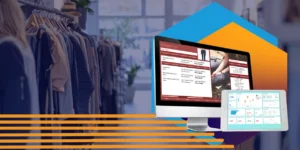
RFID technology (Radio Frequency Identification) has revolutionized our way of life in many aspects, transforming entire industries and offering innovative solutions for product management and process optimization.
RFID systems use electronic tags to transmit data via radio signals, becoming a fundamental tool in various industries, from logistics to retail. RFID is transforming the retail sector and shaping its future.
What is RFID technology?
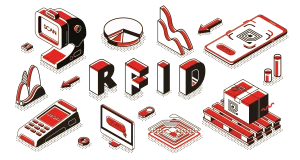
RFID (Radio-Frequency Idenfitication Identification) technology is an automatic identification system that uses radio waves to transfer data between a tag and a reader. RFID tags contain electronically stored information that can be read and written via radio frequency. Unlike barcodes, RFID tags do not need to be in direct line of sight of the reader, making them much more convenient and versatile.
There are two main type of RFID tags: passive and active. Passive tags do not have an internal power source and rely on the electromagnetic energy emitted by the RFID reader to transmit data. Active tags, on the other hand, have an internal power source (such as a battery) and can transmit data more robustly and over longer distances.
Advantages of RFID Technology
RFID technology offers numerous advantages compared to other identification systems, making it particularly attractive for the retail sector:
Improved Inventory Management
RFID enables retailers to have real-time visibility of their stock, helping to avoid stockouts and optimize inventory levels. This translates to cost savings and improved customer service. RFID systems can perform inventory counts automatically and continuosly, eliminating the need for periodic manual inventories.
- Loss Reduction
The presence of these tags on garments and items helps detect product theft since the tags, if not deactivated at the checkout, will be detected by the store’s security systems. This increases security and reduces losses due to theft. Additionally, it allows for tracking lost items, facilitating their recovery if they are within the detection range of the reader.
- Streamlining Checkout Lines
Some of the self-checkout systems found in major retail chains use this technology, allowing customers to pass through the checkout quickly and easily. This reduces wait times and enhances the shopping experience. In some cases, a fully automated payment system can be implemented, where products are detected once they are placed in the checkout basket, appearing directly in the customer’s shopping basket for payment.
- Personalization of the In-Store Customer Experience
Retailers can collect data on customer behavior with this new technology, enabling them to offer more personalized shopping experiencs. One of its applications is the ability for customers to receive additional information about products they pass by in-store on their smartphone as they approach them, or receive recommendations based on their previous purchases through the customer management system.
- Combatiing Counterfeiting
It’s possible to use radio frequency to authenticate products, making counterfeiting and the sale of illegitimate products more difficult. This possibility is very attractive for some brands to protect their reputation and increase consumer trust. In industries such as pharmaceuticals, fashion, and technology, this is especially important.
How does RFID technology work?
RFID technology consists of three main componenets: the RFID tag, the RFID reader, and the backend system.
- RFID Tag: It contains a microchip with an antenna that captures and transmits data. When the tag approaches the RFID reader, it emits a radio frequency signal that is captured y the tag’s antenna. In this way, the tag’s microchip decodes the signal and transmits the data to the reader, providing detailed information about the product carrying that tag.
- RFID Reader: It’s the device that emits the radio frequency signal and receives the data transmitted by the tag. Readers can be stationary or mobile and are designed for various applications, from entry and exit systems to handheld devices for inventories.
- Backend Systems: This is the system that processes the information received by the RFID reader and stores it or uses it for specific purposes. The data is integrated into inventory management systems, point-of-sale (POS) systems, and data analytics platforms to provide a comprehensive and real-time view of store operations.
RIOT, a partner of Cosin Consulting specializing in RFID, has its own tags and readers, which facilitate the integration of this system into your points of sale, with seamless integration with the Retail Pro retail management ERP.
Applications of RFID Technology in Retail
RFID technology has a wide range of applications in the retail sector, improving various operational aspects and customer experience.
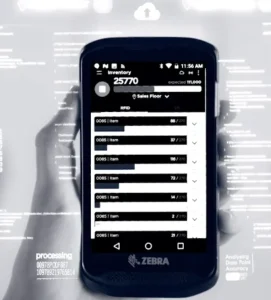
Real-time inventory management is one of its main advantages, facilitating supply chain management and reducing inventory errors. Companies can conduct full inventoris in minutes and receive automatic alerts when inventory levels are low.
The system can send alerts when products are running low. With this restocking forecast, measures can be taken to refill the shelves and avoid stockouts. This allows you to inform suppliers and even automate restocking orders if necessary.
Additionally, as we hace mentioned, some stores already have self-checkout systems that ue this technology, making the sales and payment process much faster and more efficient. It’s as simple as placing the products in the self-checkout station, and the items will be automatically identified without the need to scan them individually.
Phygital: The Fusion of Physical and Digital
The phygital concept is based on integrating physical and digital channels to create unique shopping experiences, incorporating your online shopping channels within your physical points of sale. RFID technology also plays an important role in this retail business strategy, making the connection between the physical and digital much smoother and more seamless.
With RFID, customers can interact with physical products and receive additional digital information through their smart devices. One example of its use is that, when approaching a product, they can receive details about its features, reviews from other customers, or recommendatios for complementary products.
RFID supports omnichannel strategies by enabling seamless integration between physical and online points of sale. It allows customers to verify on the retailer’s website or app whether a product is avaliable in-store and which are of the store can be found before making their visit.
JogoTech is our best ally when it comes to phygital points of sale, offering the perfect software for eCommerce integration in stores, along with fully integrated RFID technology.

What is the Future of RFID Technology?
As this technology continues to evolve, we may see even more applications in our daily lives, and these tags will become even smaller and more affordable, allowing for their integration into more products and devices.
The combination of RFID with other emerging technologies, such as artificial intelligence (AI) and the Internet of Things (IoT), promises to create smarter and more connected solutions. These innovations can improve operational efficiency and offer even more personalized customer experiences.
- Artificial Intelligence and RFID
The integration of AI with RFID can provide advanced pedictive analytics, optimizing inventory management, and improving accuracy in product demand forecasting. AI can analyze the data collected by the system in real-time to detect patterns and trends, helping retailers make informed decisions.
Internet of Things (IoT) and RFID
RFID can also be integrated with IoT devices to create a connected ecosystem where elements of the supply chain are interconnected. This allows for complete and real-time visibility of the entire process, from production to sale.
RFID technology and the phygital approach have the potential to completely transform the retail shopping experience. As technology continues to evolve and costs decrease, we are likely to see a significant increase in the adoption of these solutions in the coming years. Companies that invest in RFID and phygital will be well positioned to thrive in an increasingly competitive and demanding market, offering more personalized and efficient shopping experiences, improving inventory management, and reducing costs and losses.
Would you like to be able to do inventories in minutes? Contact our commercial team and our digitization experts will help you find the technology that best suits your business.